
Survey, lifting and alignment for machine relocation
Rigging plan, lift points, floor loading, shaft alignment and relocation safety checks.

2026-06-07
Application context
In industrial plants in Dong Nai and nearby areas, work related to machine relocation and alignment usually intersects electrical, mechanical, construction and HSE. Without a shared process, small preparation errors escalate into outages, rework or acceptance disputes. Therefore inputs, hold-points and document outputs must be explicit.
Readers should treat the following sections as a training structure for editors and site engineers, not as a claim that BTH has completed a named project. Simulated scenarios stay generic: industrial facility, Dong Nai industrial parks, multi-shift operations, limited shutdown windows, and shared access with production teams.
Technical objectives
Industrial machine moves combine mechanical, lifting and civil issues: centre of gravity, OEM-approved lift points, travel path, floor capacity, door clearances and set-down zones. Do not use improvised welded lugs as lift points without engineering. Method statements need path drawings, lifting gear, signal person and exclusion zones.
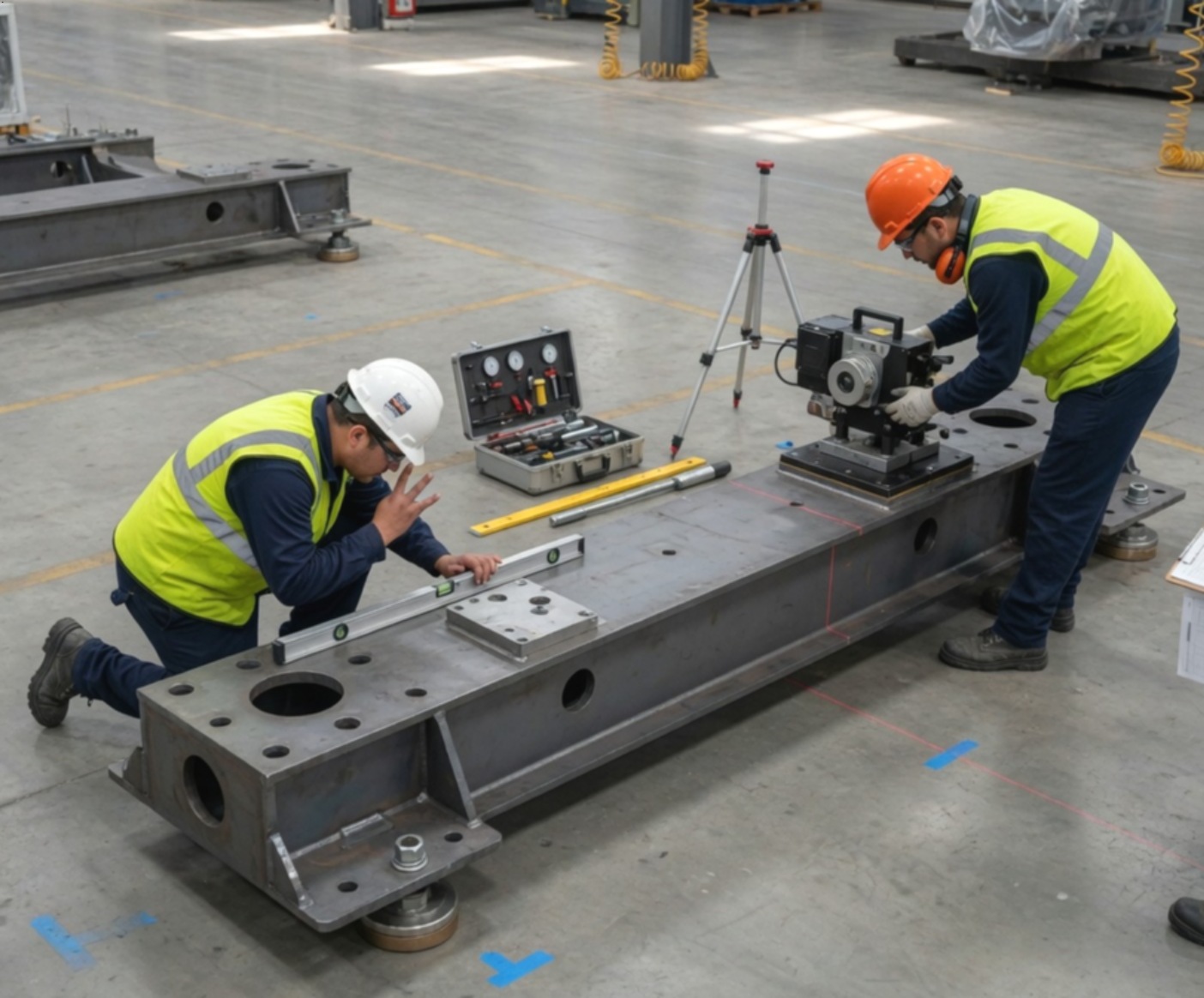
After set-down on foundation/pads, perform rough then fine alignment (laser/dial per OEM), torque anchors in sequence, and re-check after 24–48 hours if required. Alignment records are part of handover — not merely “machine is in place”.
A second objective is interface control: machine relocation and alignment rarely fails only inside one discipline. Cable trays clash with pipe racks, foundations clash with buried services, and control logic depends on field devices that must be labelled the same way on drawings, panels and HMI tags. The framework therefore forces a shared coding system early.
Recommended sequence
Suggested sequence for machine relocation and alignment: (1) collect operating constraints and as-found drawings; (2) survey/risk assessment with records; (3) freeze method statement and ITP; (4) execute/inspect to hold-points; (5) final tests or reviews; (6) pack documents. Order may flex by contract package but recording steps are not optional.
Between steps, run a short coordination gate with production: confirm the next isolation window, confirm exclusion zones, and confirm whether hot work, lifting or excavation permits are still valid. Many brownfield delays come from permits expiring mid-task rather than from missing tools.
If scope grows during execution, stop and re-baseline the method statement instead of absorbing “small extras” silently. Silent scope growth is how electrical, mechanical and civil packages lose their interface matrix and create punch lists that never close.
- Confirm OEM lift points
- Path/floor load assessment
- Lift exclusion zone barriers
- Rough then fine alignment
- Anchor torque + re-check
- Alignment minutes
Site constraints and HSE
Any activity linked to machine relocation and alignment must respect area PPE, work permits, energy isolation where required, and the worker’s right to stop work when hazards appear. Brownfield work needs production-shift coordination; do not expand into unauthorised zones.
HSE runs with technical work: pre-shift toolbox talks, subcontractor control if any, and incident/near-miss reporting under client rules. This does not invent an internal BTH HSE system beyond principles published on the site.
Typical industrial constraints include forklift routes, limited laydown space, noise windows near occupied offices, dust control near packaging or clean-ish areas, and live utilities that cannot be isolated for long. Method statements should name those constraints in plain language so a new supervisor can brief the crew without guessing.
Emergency response is part of the technical plan: nearest muster point, fire extinguisher locations for hot work, first-aid contact, and who calls plant emergency numbers. These details belong in the toolbox record, not only in a corporate binder offline.
QA/QC and records
Acceptance checklists for machine relocation and alignment need measurable or observable criteria, not signatures alone. Before/after photos when allowed, test minutes and as-built (if in scope) are filed by item code. Rejected materials never enter installation.
Document control tips for editors: one item code across photos, checklists and drawings; revision letters on any redline; and a clear “open / closed” state for punch items. Avoid dumping unsorted PDFs into a handover folder on the last day.
For simulated projects on this website, do not invent pass rates, torque values, megohm readings or pressure figures. Describe the field names and the decision gates instead. Real numbers appear only when BTH provides verified site data.
Conclusion
machine relocation and alignment works only when engineering, site execution and documentation stay in step. This article is a work frame for editorial and simulated internal training — not a substitute for design, ITP or project HSE approval. Real metrics, certificates and clients are added only when BTH provides them.
Demo content